


Books for the Holiday Griever
Books for the Holiday Griever
If you’re grieving this season, you’re not alone. Below is a curated list of books that offer comfort, understanding, and companionship through the holidays and beyond.
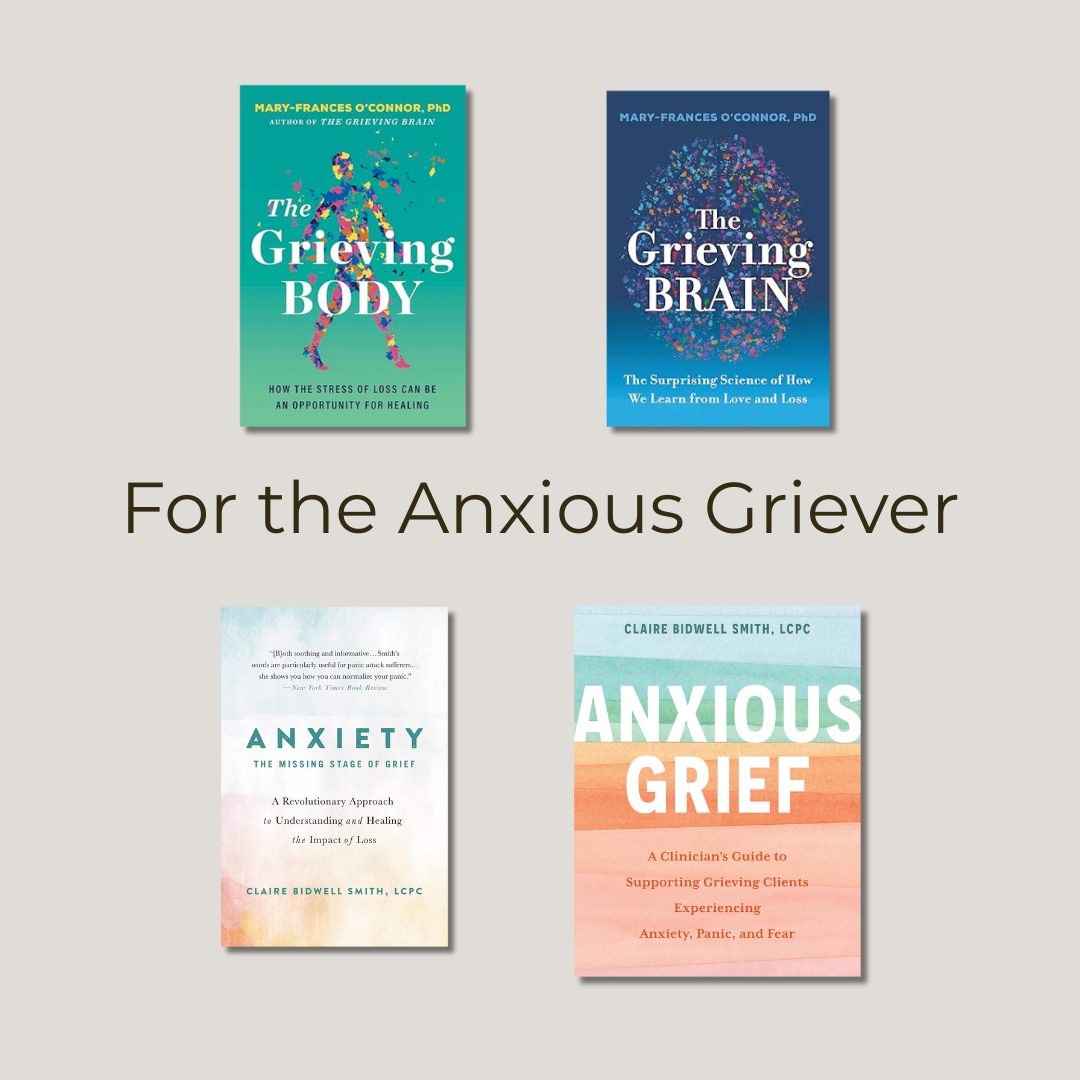
click book title to view on amazon.com
- The Grieving Brain by Mary-Frances O’Conner
- The Grieving Body by Mary-Frances O’Conner
- Anxiety the Missing Stage of Grief by Claire Bidwell Smith
- Anxious Grief: A Clinician’s Guide to Supporting Grieving Clients Experiencing Anxiety, Panic, and Fear by Claire Bidwell Smith
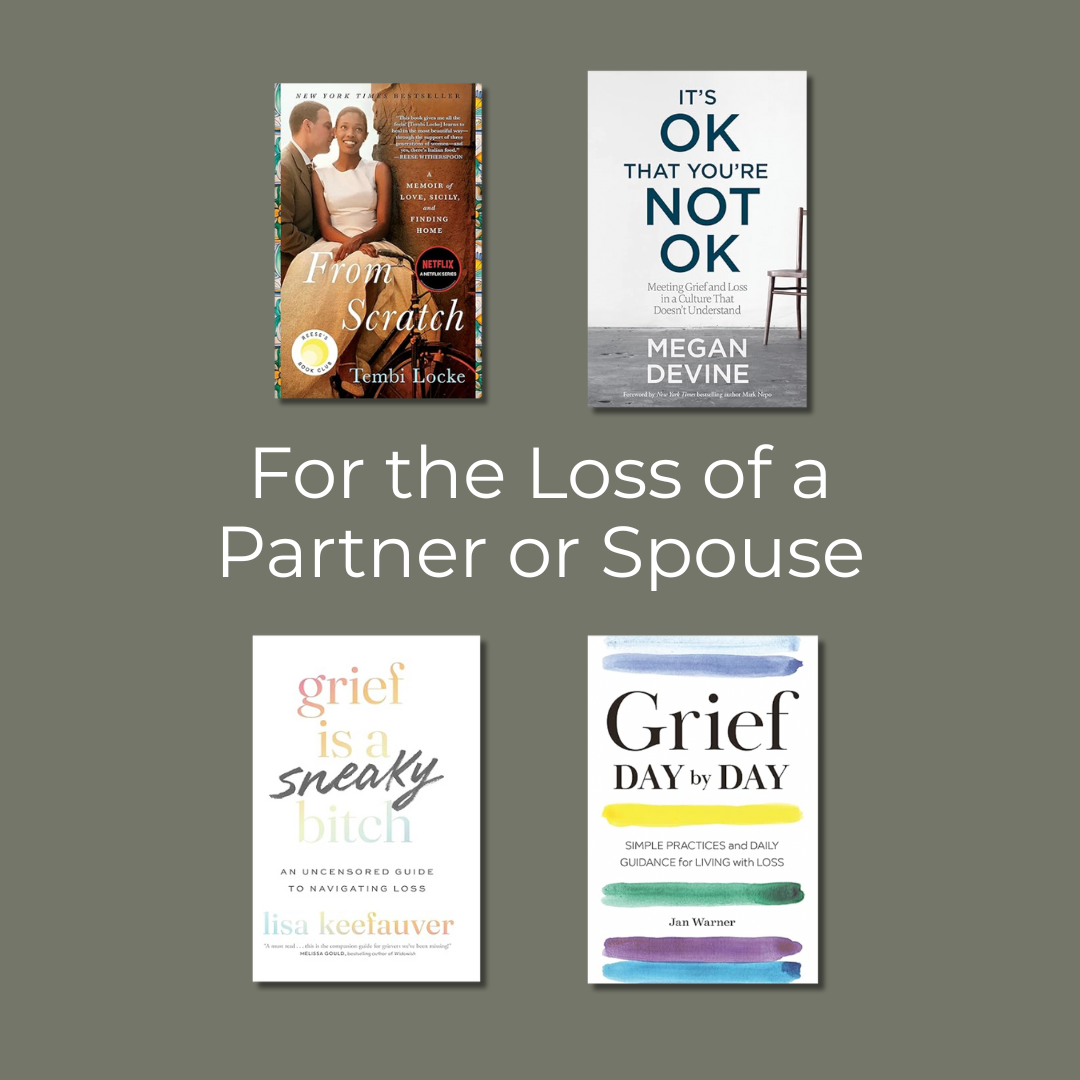
- From Scratch by Tembi Locke
- It’s OK That You’re Not OK by Megan Devine
- Grief is a Sneaky Bitch by Lisa Keefauver
- Grief Day By Day by Jan Warner
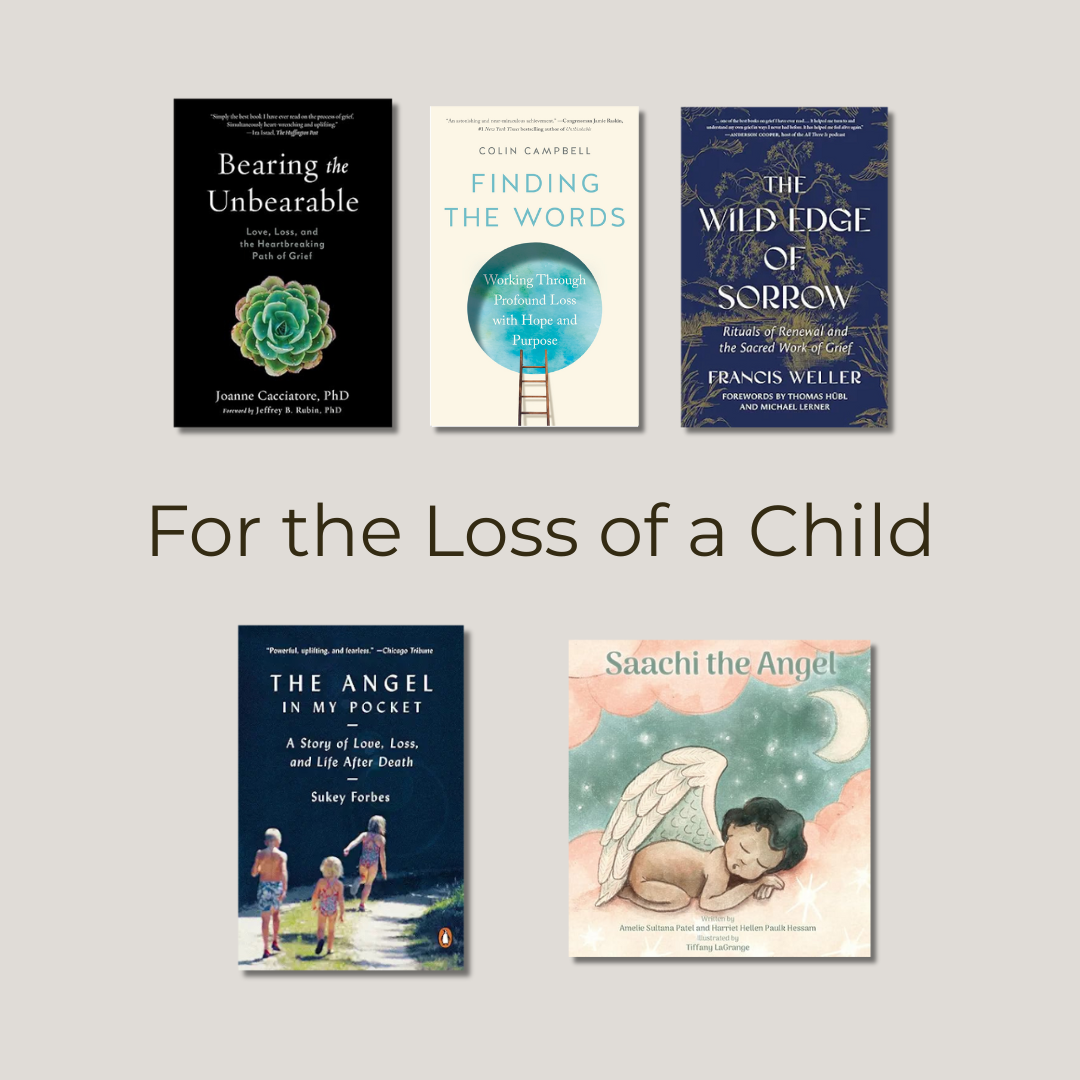
- Bearing the Unbearable by Joanne Cacciatore
- Finding the Words: Moving Through Profound Loss with Hope and Purpose by Colin Campbell
- The Wild Edge of Sorrow by Francis Weller
- The Angel in My Pocket by Sukey Forbes
- Saachi the Angel by Amelie Patel and Harriet Hellen Paulk Hessam
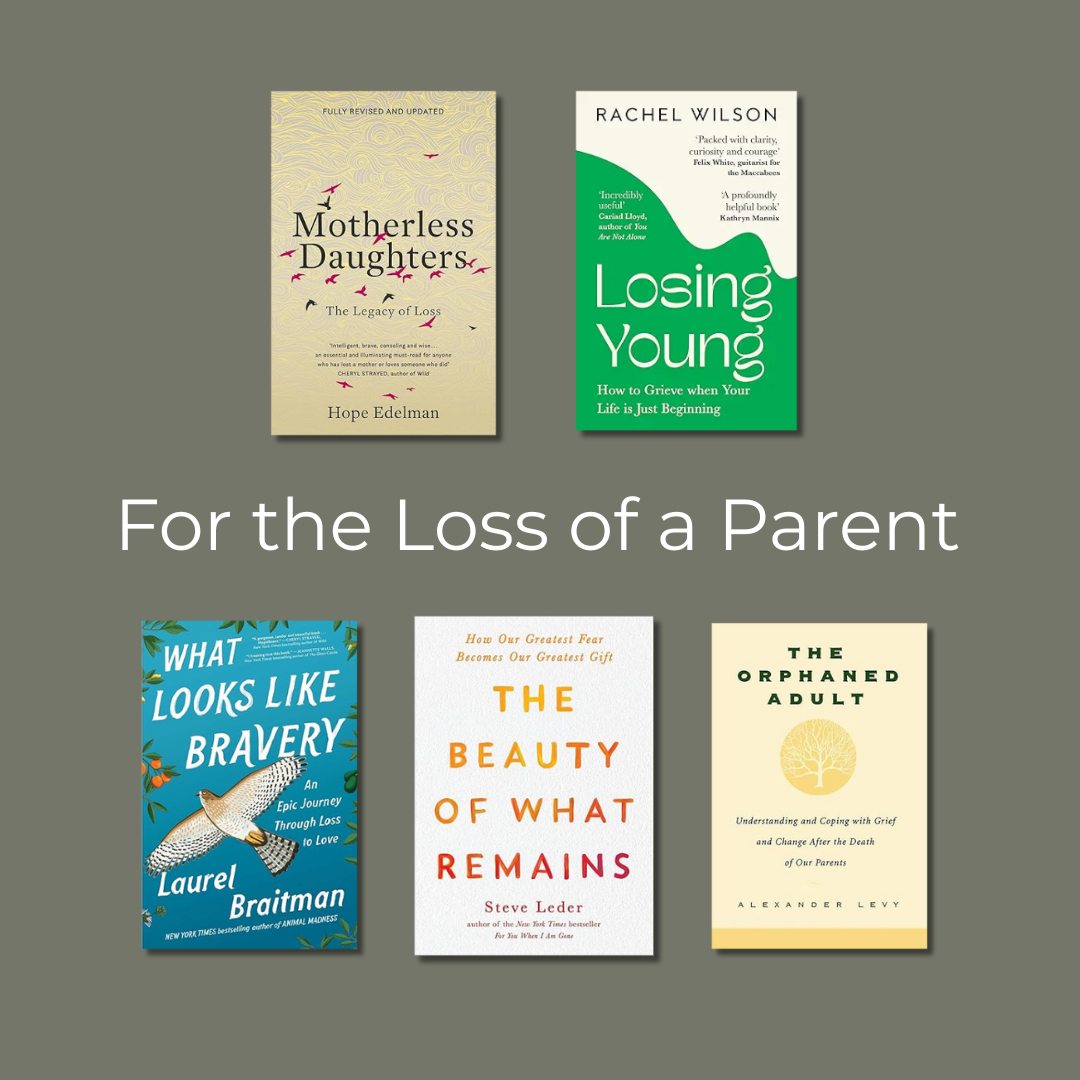
- Motherless Daughters: The Legacy of Loss by Hope Edelman
- Losing Young by Rachel Wilson
- by Laurel Braitman
- The Beauty of What Remains by Steve Leder
- The Orphaned Adult by Alexander Levy
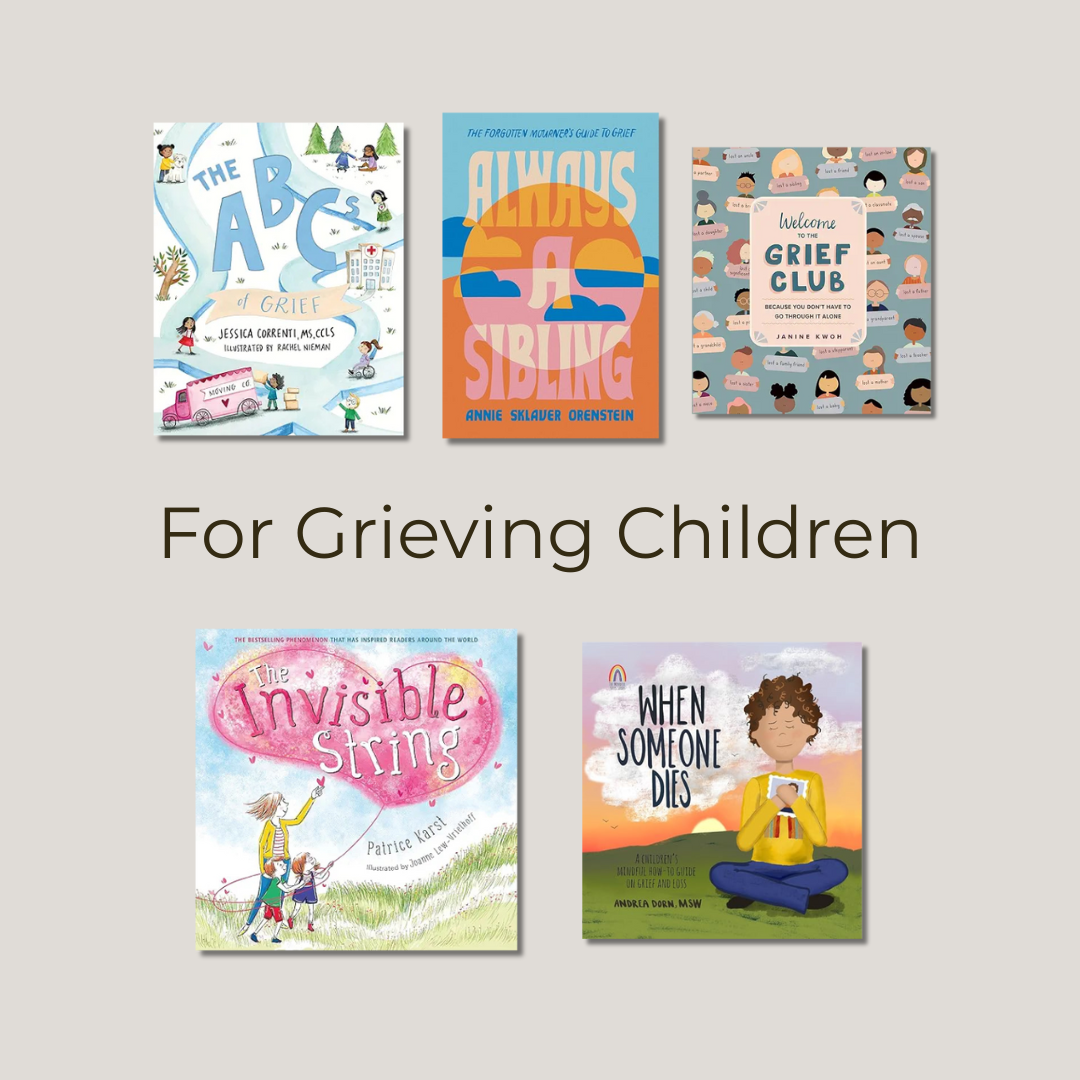
- The ABCs of Grief: A Children’s Grief Book for All Types of Loss and Grief by Jessica Correnti
- Always a Sibling: A Forgotten Mourner’s Guide to Grief by Annie Sklaver Orenstein
- The Invisible String by Patrice Karst
- by Andrea Dorn
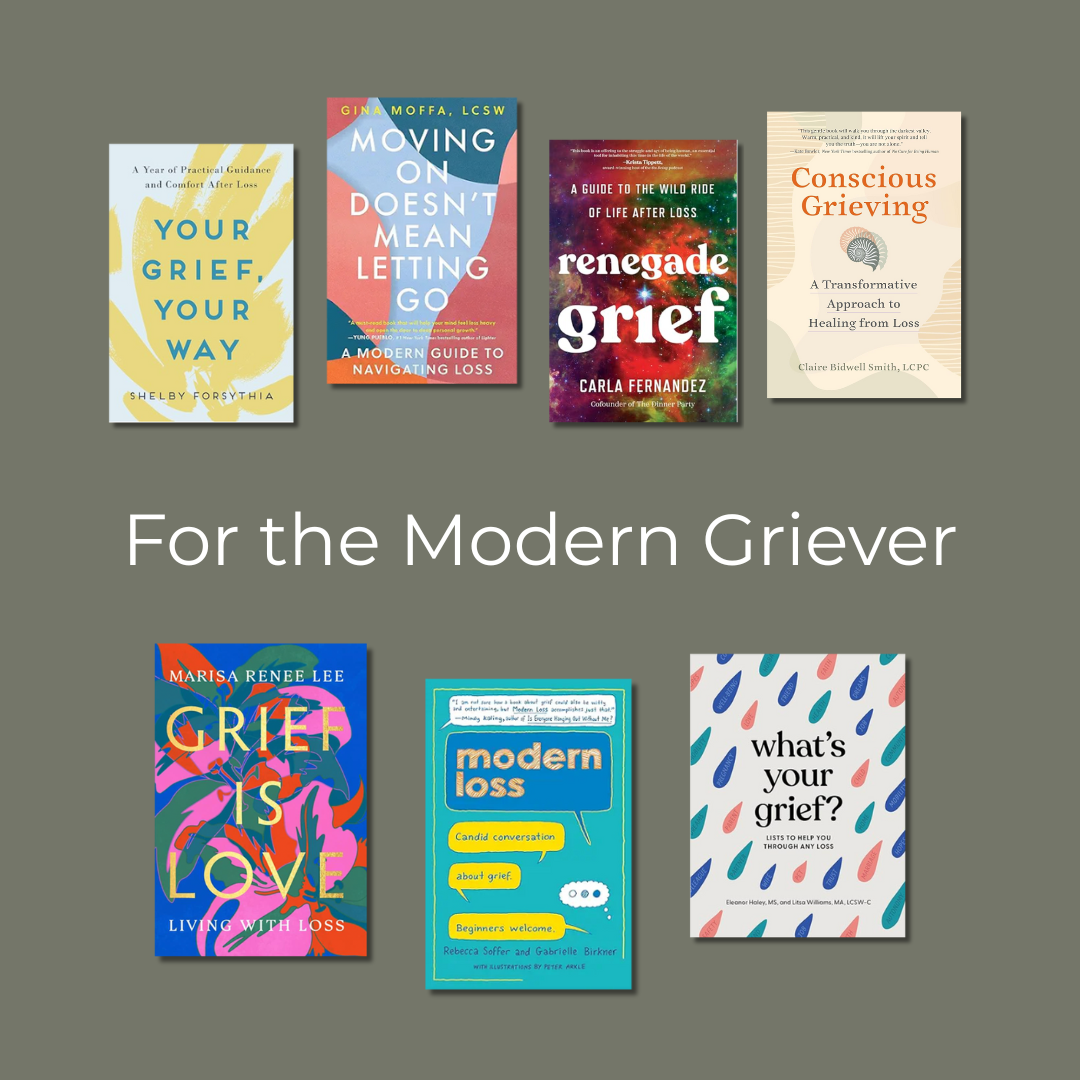
- Your Grief, Your Way by Shelby Forsythia
- Moving On Doesn’t Mean Letting Go: A Modern Guide to Navigating Loss by Gina Moffa
- Renegade Grief: A Guide to the Wild Ride of Life After Loss by Carla Fernandez
- Conscious Grieving: A Transformative Approach to Healing from Loss by Claire Bidwell Smith
- Grief is Love by Maria Renee Lee
- Modern Loss: Candid Conversations About Grief by Rebecca Soffer
- What’s Your Grief? Lists to Help You Through Any Loss by Eleanor Haley & Litsa Williams
Wherever you are in your grief, I hope something here offers a bit of comfort or clarity.
With love,



6 Things About Mother Loss That Every Therapist Should Know
Too often, I've heard from women that their therapist does not understand mother loss. They feel that their ongoing grief is frequently dismissed and that the wide-reaching effects of losing a mother are misunderstood by most clinicians.
Hope Edelman and I want to tell you about six surprising things about mother loss that all counselors should know.
- Grief for a mother lasts a lifetime. It is perfectly normal for a woman to continue to long for her mother throughout her entire life.
- The loss of a mother affects all of a woman's attachments, including her romantic relationships and her parenting.
- Approaching, reaching, and passing her mother's age at time of death is a significant and emotional rite of passage for daughters. Additionally, watching her child reach the age she was when her mother died can bring on complicated emotions, anxiety, and reactivate old grief.
- It's very common for a woman who lost her mother to feel a lack and deficiency around female identity and motherhood. Often these women will feel a sense of imposter syndrome around other women who have not experienced mother loss.
- Mother loss can lead to an intense fear of other losses. Health anxiety, catastrophic thinking, and fear of death or abandonment are common for women who have lost mothers.
- Women who have experienced mother loss often feel "stuck" in certain parts of their development, as if a piece of them never got to grow up.
If you are a mental health professional who would like to learn even more about working with mother loss, please join me and Hope Edelman for a six-week Mother Loss Certification program. Hope and I both bring a wide breadth of personal and professional knowledge to our work. Hope and I have worked with thousands of women and led dozens of retreats to help women who have lost their mothers.
The Mother Loss Certification is open to clinicians, therapists, counselors, graduate-level students, and any other professionals in proximity to grief. We look forward to providing you with the tools you need to support daughters through their journey of mother loss. Learn more and apply >>
Find books and online support for mother loss on my Grief Resource page.
The Conversation of a Lifetime
 If you lost someone you loved today, would you feel like you’ve had as many meaningful conversations as possible with them? Of course, we could never have enough meaningful conversations with the people we love, but so many of us lose loved ones not having any of the conversations they wish they could have.
In my work as a grief therapist, many of my clients experience feelings of remorse after the death of a loved one. There are often many things they wish they could ask their person. We sit in session after session talking about the questions they would like to ask, and the conversations they wish they could have. I always leave these sessions with the same thought – what if we had these conversations before it was too late? Would it change how we grieve? Would it change how we understand and think about the people we love? I believe it would.
When I was 14 years old, both of my parents got cancer at the same time. I was 18 when my mother died and 25 when my father died. As an only child, I was experiencing the loss of my whole little family just as I was entering adulthood. Losing them left me with a lot of big, existential questions. I wanted to know why certain people die when they do, where they go, if we are still connected, and what it is that makes a life meaningful.
Part of what shaped my thoughts around life and death were the two very different ways my parents died. My mother struggled right up until the very end to acknowledge and accept that she was dying. That meant that we didn’t have conversations about it, didn’t say goodbye, and after she was gone, I was left with an enormous amount of guilt and regret.
My father, on the other hand, chose to embrace the end of his life, spending his last days at home, with me and a hospice team caring for him. Because of this approach, my father and I had beautiful conversations, we had the chance to say goodbye, and I was even holding his hand when he died. It was a peaceful death that I know not everyone gets to experience. After he was gone, I felt that I had said everything I wanted to say and that I had the opportunity to ask him the kinds of questions that still lingered for me after my mother’s death. It wasn’t lost on me that this is a rare experience.
Even 25 years later, there are so many things I wish I could go back and ask my mom. I want to know what her teens were like, who her favorite teacher was, her first kiss, her best friend when she was 30, what she imagined for my life, and what she thought happens when we die.
These two different deaths have informed a lot of the work I do today with clients as I help them navigate their own grief processes. Guilt and regret are two of the biggest issues grieving people struggle with. I know that we often don’t have these conversations because we assume there is time for
them down the road. But that isn’t always the case. Or maybe we think we’ve had meaningful conversations, but then after our person is gone, we realize there is so much more we could have asked them. This has been evident more than ever in this last year, as the pandemic has served as a wake-up call, reminding us that we never know what is around the bend.
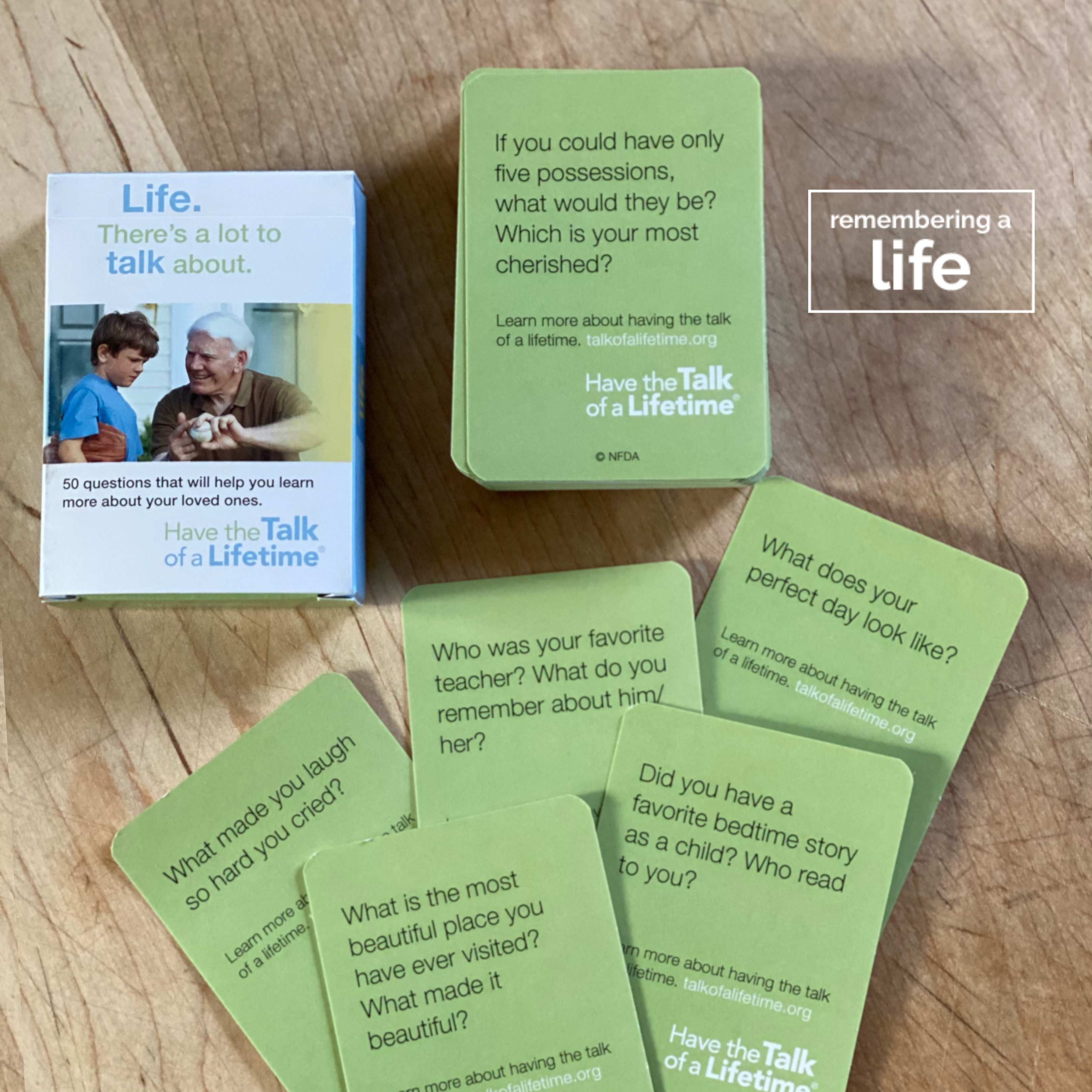
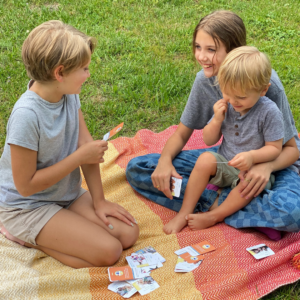
I think the answer is to start having meaningful conversations with our loved ones when there is plenty of time. Make it a regular practice and a part of our family culture. I’m always looking for new ways to encourage people to be proactive about conversations and end-of-life matters, so when I found out about the Have the Talk of a Lifetime Conversation Cards I was so moved.
The cards are fun, easy and full of questions that prompt incredible conversations, like:
- Describe the most adventurous thing you’ve ever done. Were you scared? How did you feel afterward?
- Describe your greatest accomplishment. What makes it so special to you?
- What has been the happiest moment of your life? The saddest?
- Do you have any regrets or things you wish you’d done differently?
I can only dream of having been able to ask my mom these questions, but I know there are opportunities to still engage with other loved ones in my life, including my own children. I get asked a lot about how to live a more meaningful life. Conversations like this are how.
__
Listen to Claire talk about the role anxiety plays in grief and how we can manage it after loss in this month’s Remembering A Life podcast.

Discovering Your Safe Place to Grieve

Summer is almost over and fall will be here soon. This change in season marks a transition for many of us – sometimes it’s back to school, or a change in work temp, an end to languid summer days and the beginning of a more focused time in our lives. This year might be looking especially different due to Covid, which I know from personal experience is adding an additional layer of anxiety.
Most people associate grief with death and the loss of a person, but grief takes many forms and can grow from almost any kind of transition. We can lose a job or end a relationship with a friend, say goodbye to a sweet pet, or move across the country – grief arises for all of those things.
Since grief can come from anywhere at any time, it’s important to learn how to grieve amidst any situation and circumstance. As part of my August Anxiety Relief Series, I’ll be offering 50% off my course, A Safe Place to Grieve. This program is based on the process I use every day with my grief therapy clients. I will go on a journey with you to another side of grief and help you find peace, connection with your loved one, and a renewed sense of self.
Use code AUGUSTRELIEF50 until Monday, August 17th.
It can feel scary to really let grief wash over you and through you, but I promise that surrendering to it is easier than fighting it. When we fight grief or try to suppress the feelings that come, it will manifest in anger, depression and anxiety. So hold tight, reach out to a friend and grab a box of tissues, and let yourself grieve. You’re not the only one. You’re never alone.
Love,
Claire


Hard Times Don't Last Forever

Every week of Covid has felt like its own year. Whatever was happening last week is different this week. I remember thinking early on that this would be an important time in our lives to learn a lot about ourselves, but I really couldn't have imagined just how true that would be.
I've learned about myself as a wife, and a mother, a grief counselor, and as a citizen. I've learned how to plumb the depths of my own anxiety and also my resilience. I've discovered so many new layers to every relationship in my life. I've felt afraid and humbled, and also centered and inspired.
Whether you yourself are facing recent grief and anxiety, or feeling the uncertainty of day to day life, know that you are not alone. When we are grieving we often feel like we are wandering through a thick fog. Cultivating a steady practice of any sort can help us feel grounded.
I have found meditation to be the single-most helpful tool that I’ve learned in twenty years of struggling through grief. Setting a consistent meditation practice can enable us to return to the present moment and alleviate much of the anxiety and sadness we feel swept away by.
I know it's not over, not in any sense, but I feel far enough out into the sea of this new world to be able to see the shore and reflect on what it means to swim in these uncertain waters. I have hope that everything that is breaking down right now will be rebuilt in ways that are better for all of us.
Life is impossible to predict, but I am here to support you.
Love,
Claire

Helpful Grief Resources For You
My basic advice is to always seek out support for grief because it can be very overwhelming and also lonely and isolating. Finding online support groups, reading books and connecting with others who understand what you're going through is very healing.
Online Support:
Modern Loss - online community for all grievers
Dougy Center - for grieving children
Compassionate Friends - for grieving parents
Motherless Daughters - for women who have lost a mom
Soaring Spirits International - for widows and widowers
Death Over Dinner - community grief and loss
The Dinner Party - community grief and loss
Holding Steady - my free weekly live calls with grief experts
Books:
On Grief and Grieving - Elisabeth Kubler-Ross
It's OK That You're Not OK - Megan Devine
Bearing the Unbearable - Joanne Cacciatore
Permission to Grieve - Tom Zuba
Anxiety the Missing Stage of Grief - Claire Bidwell Smith
Movies:
Extremely Loud and Incredibly Close
One More Time with Feeling
Coco
Truly Madly Deeply
P.S. I Love You
Podcasts:

A Few Tips for Managing Anxiety

As someone who has been through a lot of loss, I tend to get anxious about things like the coronavirus. In case you do too, I wrote up some quick tips on managing that anxiety. For starters, it’s completely normal to feel anxiety around a situation like the coronavirus outbreak. But when we get stuck in a cycle of anxious thoughts it does not do us any good. We can become overly preoccupied with trying to "figure it out." We become obsessed with thoughts surrounding disastrous outcomes and how to prepare for them. Our brains are tricking us into thinking that this kind of rumination is helpful, when really it causes more stress.
Here are a few tips to calm yourself and harness those anxious thoughts.
- Limit your news reading/watching. Appoint a friend or family member to update you if there is something truly important to know.
- When you catch yourself having obsessive thoughts make an attempt to pivot to a different subject, and remind yourself that ruminating on it will only cause you more stress.
- Take advantage of a meditation app to soothe your mind and steer your thoughts away from anxious ones.
- Choose grounding activities - taking a walk, a bath, get a massage. When we send messages to our bodies that we are calm, our brain is better able to follow suit.
- Each time you find yourself stuck in an anxious disaster scenario try picturing something opposite. (I like to imagine myself at my daughter's wedding twenty years from now.) Allow yourself to dwell in the positive fantasy just as intensely as you had been with the negative, fear-based thought.
I hope you find these helpful. You are not alone.
Love,
Claire

Does Your Partner Understand Your Grief?
We've finally made it to February after the longest January ever! And with Valentine's Day around the corner I'm thinking about how grief impacts our romantic relationships. In all the years that I've been working to support people who are moving through loss, one of the biggest issues I've encountered is how grief and loss affects our relationships. Most people do not feel that their spouse or partner truly understands what they are going through when they are grieving, and this is something that can cause unnecessary strain and stress on the relationship.
Grief and loss can can also cause us develop anxious or avoidant tendencies in our relationships, making us fearful about opening up and being truly vulnerable with the people we love.
These are normal reactions, even when they are problematic. Of course it's scary to love someone when you've experienced loss. Being compassionate with yourself in this area is vital. Finding ways to communicate with your partner about how you're feeling, and what it's like to have loss in your life, is also important.
Overall, one of the best ways I've found to ease that tension in your relationship is to find other outlets for your grief. We tend to expect our partners to be fill every role in our lives, but that's not realistic and generally just impossible. Joining a local grief group, finding an online community, or reading books about grief that make you feel validated and nurtured can help take the pressure off your partner and help you feel understood and soothed through other outlets.
If you have lost a parent and would like to do more work around this area in relation to your partner, consider singing up for my online course Supporting Your Partner Through Loss. Using the included workbook and audio presentation, you and your partner work through the material together.
Love,
Claire

Healing in the New Year

I love a new year, a fresh start, and a welcomed beginning. But new years are also tinged with sadness and nostalgia for me. Each new year marks another without my mom, my dad, and other beloved friends I have lost. Each new year reminds me that I am moving forward, while they are not.
This realization hit me hardest the first year after my mother's death. Age eighteen, I remember sinking to the floor of a back hallway in a nightclub where I was ringing in the new year with my boyfriend. My legs literally buckled with the thought of entering into a year in which my mother had not lived. And while my grief is no longer as visceral as it was then, I always find myself reflective in the new year.
In recent past I've taken to committing to two things in order to both honor and heal my grief. I commit to better self-care (an obvious one, I know, but one that does get neglected when we are grieving) and I also commit to finding new ways to connect with and memorialize my lost loved ones. I choose ways to volunteer or create in their honor, I write them letters, and I put up fresh photos or find a piece of my mother's jewelry to wear.
Most importantly, I let it be okay that I still carry sadness. I let it be okay that my life has been forever changed by these losses. We cannot make strides, nor heal or grow, if we do not first accept the very place from which we are desiring those things. Let it be okay that you are not over your loss. Remember that two things can be true at once: you can forever hold sadness over your loss, and you can also work to create a meaningful life for yourself.
Big love in the new year,
Claire

Telling the Story of Loss
In my work, I’ve come to understand that one of the significant reasons anxiety manifests after the death of a loved one is from not allowing ourselves to fully examine the story of our loss. Some people suppress their stories simply out of not having a natural outlet, and others do so from fear of feeling more pain. In the clinical world this is called grief avoidance, and it can be quite common and normal to want to avoid confronting the loss so directly.
But several things happen when we stifle our stories of loss. Namely we lose the opportunity to really explore that story, to unpack it, to deeply understand it, and to give it a home outside of our bodies. When we find ways to externalize the story we gain the opportunity to see the different ways in which the story we are holding onto serves us or harms us.
The truth is that even if you are not sharing your story, you are still carrying it around inside of you. Finding ways to let it out, to look at it in the bright light of day, and to share it, helps it breathe a little. It helps us breathe too.
As a species, storytelling is one of our most ancient forms of communication. It is the way in which we have passed down lineage and preserved history. Telling stories is one of the most essential ways we learn about ourselves and our world.
Even if you do not consider yourself a natural storyteller you must recognize your innate ability to be one anyway. Think of the story you tell about how you met your significant other, or how you came to adopt your dog, or the first car you ever bought. There is always a story. And now there is the story of how you lost one of the most important people in your life.
I invite you to join Tembi Locke and myself next month for a 6-week memoir writing course, focused specifically around writing about loss. It will be a healing, cathartic, safe, and inspiring experience beginning October 5th. Spaces are filling up fast - I hope you'll join us!