


Getting Started With Keeping A Journal
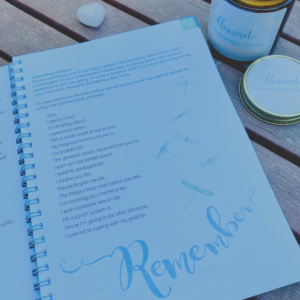 As a writer and a therapist, I’ve always believed in the importance of journaling during the grief journey. Simply keeping a journal can help regulate emotions, provide an outlet for all the big feelings you are grappling with, and serve as an incredible way to reflect on your life as you move forward.
The truth is that we never get over the people we lose but it’s understandable that finding ways to move forward in our lives and be in the world without the people we love can feel daunting when you are going through a big loss. It’s also true that one of the most effective tools I’ve learned for this is writing about it.
The best part is that you don’t have to be a writer to take up journaling. I know that some people feel intimidated by the idea of writing, but this isn’t the kind of writing you need to stress about. The things you write in your journal are just for you. Your sentences don’t have to be perfect, you don’t need to use big words, and your thoughts don’t even have to be concise. No one has to read the things you write, including you – once you’ve journaled it’s up to you if you even want to reread what you wrote.
The point is to get your thoughts and feelings down on paper. When we are grieving we experience so many varying emotions, such as anger, disappointment, envy, self-doubt, sadness, guilt, and anxiety. It can be hard to navigate all of these, especially when you feel different ones day to day, or even hour to hour. Writing about what you’re feeling is one of the best ways to move through the rollercoaster of emotions.
When my mother died when I was eighteen, I wrote all the time. It felt like the only place I could hear myself think. I also wasn’t sure who to share all of my complex thoughts about her death with, so writing in my journal became a vital outlet for my grief process. I see this all the time with my clients as well. Taking a few minutes in the morning to write about how you’re feeling can better prepare you to deal with the responsibilities you have to face in your daily life. Or, taking some time to write in the afternoon or evening after a demanding day can help alleviate the pressure that builds up over the course of a day.
The best part about journaling is that it doesn’t have to be an arduous task. Don’t feel like you need to sit down and write for an hour, or that you have to write anything too complex. Try freewriting anything that comes to mind, or even setting a timer to write for just five to ten minutes can reduce any pressure you might feel around this kind of activity.
I also think that when we keep a journal during our grief process it can serve as a wonderful way to reflect on all the ways you have changed or grown since going through your loss. Oftentimes in grief we can experience the feeling of being stuck, but using your journal to examine how you felt a few months or weeks ago can enable you to see how you are growing in ways that you might not be aware of.
There are even studies that show that journaling can have positive effects on our physical health and even our sleep! That’s because writing provides an outlet and a release from all the heavy emotions we carry on a regular basis, especially when we are grieving.
I love the journal that is included with the Remembering a Life Self-Care Box because it includes beautiful quotes like, “Your memory feels like home to me. So whenever my mind wanders, it always finds its way back to you.” The box also includes essential oils and a candle so you can really make a ritual out of the journaling process.
Lastly, if you’re not sure what to write, the Remembering a Life Grief Journal includes a list of helpful prompts that will help get your pen flowing. Remember, writing doesn’t have to be intimidating – it’s a form of self-care and reflection that will help you navigate one of the most difficult experiences of your life. Grief can be a transformative process and finding ways to allow ourselves to open up to this journey is the way to heal.

Planning Intentional Time To Sit With Your Grief
 As a therapist specializing in grief, people often ask me how they can process their loss the “right” way. I understand why they want a formula for how to move through loss. Death is so disorienting. But there really is no specific blueprint or plan - our grief is as unique as the relationship we had with the person we lost.
So, what are we supposed to do when someone dies? I wish I had a simple answer. And in some ways, I do. Allow yourself to fully grieve. Listen to your grief, allow yourself to feel your pain. It won’t be easy, but we cannot know what we need to do or feel until we listen to what grief is asking of us.
I often tell my clients to plan intentional time to sit with their grief. This looks different for everyone, and it can be hard to know where to start. Which is why I was so happy to learn about the Remembering A Life Self-Care Box.
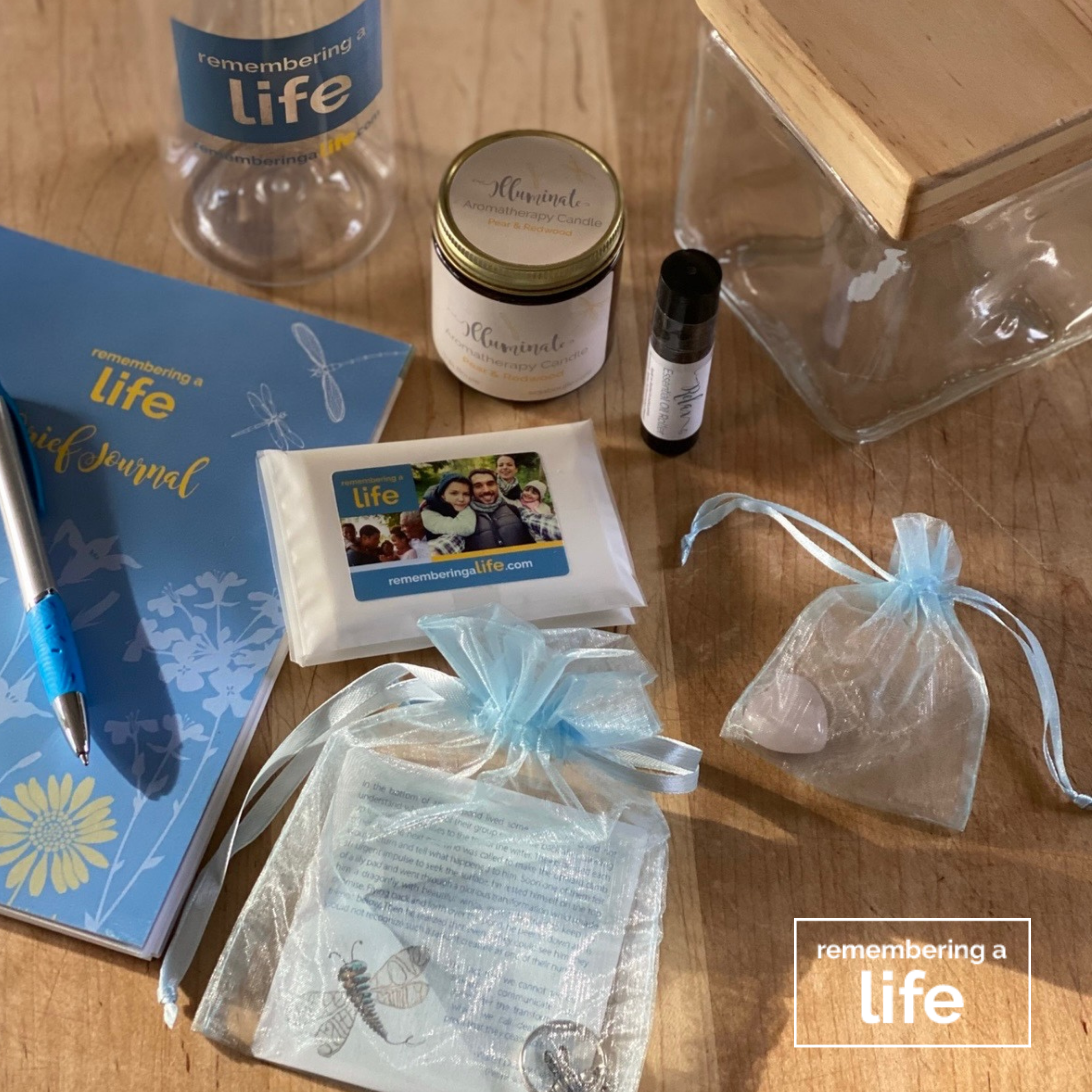
The items in this box were carefully selected to help grieving individuals find relaxation, reflect and remember:
- Journal: Writing is an incredibly powerful tool. Whether your loss was recent or many years ago, writing through grief is instrumental to clearing out all the weight we carry with us in the aftermath of a significant loss. With the Remembering a Life Grief Journal, you can use the featured writing prompts as your guide, write about what you're feeling at any given moment, or a combination of both. Let whatever comes out flow naturally. Be gentle and compassionate with yourself as you do so. Allow space for emotions to arise and let them out. There is something so cathartic about putting pen to paper.
- Memory Jar: Grief is an extension of love and connection. Finding ways to maintain meaningful connection to your person is so important. I love the idea of jotting down favorite memories on pieces of paper to store in the jar to read on special anniversaries or holidays. What a wonderful way to reminisce and feel the presence of your loved one on meaningful days!
- Candle and Essential Oil Roller: A comforting scent can bring us into the present moment and provide an opportunity to take a step back from an active mind. The thoughtfully curated pear-and-sandalwood-scented candle offers a sense of warmth and well-being, while the essential oil roller blend of sweet marjoram, orange, and lavender is incredibly calming.
- Dragonfly Keychain and Story: The Dragonfly Project was founded in 2002 by an 11-year-old girl who wanted to reach out to others who were grieving the loss of a family member or friend. The Dragonfly Project since then has been bringing comfort to more than 100,000 grieving individuals in the United States and around the world.
- Rose Quartz Stone: Meditation has been the single-most helpful tool that I’ve learned in over twenty years of struggling through grief. I know that for many, meditation can seem cliché, and it’s totally normal to have a healthy dose of skepticism. But meditation is simply about learning how to observe your thoughts rather than react to them. The only requirement is that you have an open mind and that you don’t put pressure on yourself to do it perfectly. The stone provided in the Remembering A Life Self-Care Box can serve as a simple reminder to observe your thoughts. Keep it in your pocket or purse and gently rub your thumb across the smooth stone to help ease feelings of anxiety and to promote relaxation.
- Water Bottle: Grief can be so physically exhausting. We can easily overlook our basic needs when life is completely turned upside down. Keeping a pretty water bottle nearby is a helpful reminder to tend to these needs.
We seem to know more than ever about the psychology of grief, but nonetheless continue to live in a society that shies away from death. It’s no wonder we often feel incredibly isolated after the loss of a loved one! If you are in the midst of grief, I encourage you to take intentional time to sit with your grief and really get to know it. It can feel scary to really let grief wash over you and through you, but I promise that surrendering to it is easier than fighting it. Grief asks so much of us, so remember to nurture yourself. Reach out to your community, create healing rituals, take a walk outside, and above all, be kind to yourself.
---
Listen to Claire talk about the role anxiety plays in grief and how we can manage it after loss on the Remembering A Life podcast. Purchase the Remembering A Life Self-Care Box for yourself or to give to someone you love here.